Open Today Sales: 9 AM-3 PMService: Closed
The 2026 Toyota Prius and the 2026 Toyota Prius Plug-in Hybrid share the same sleek current-generation design, the same 2.0-liter hybrid foundation, and the same standard Toyota Safety Sense 3.0. Where they differ is in how they use electricity. The Prius is a self-charging hybrid that never needs to be plugged in, while the Prius Plug-in Hybrid adds a larger battery that can handle many daily drives on electric power alone. So which one fits the way you drive? Here is how the two compare, side by side.
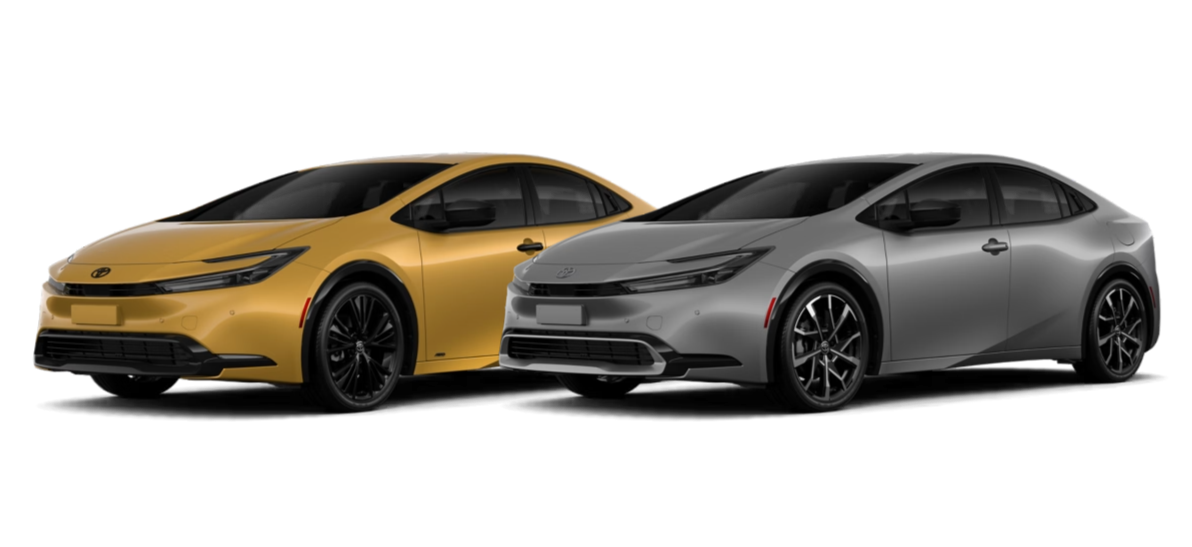
Both models pair Toyota’s fifth-generation hybrid system with a 2.0-liter four-cylinder engine and a continuously variable transmission. The 2026 Prius produces 194 net combined horsepower with front-wheel drive, or 196 horsepower with available Electronic On-Demand All-Wheel Drive. That AWD system uses a rear-mounted electric motor to add traction when pulling away, on slippery roads, and through corners, and it is available on every Prius trim. Toyota estimates 0-to-60 mph times of 7.2 seconds for FWD models and 7.0 seconds with AWD.
The Prius Plug-in Hybrid steps up to 220 net combined horsepower and a 13.6 kWh lithium-ion battery, and it is offered with front-wheel drive only. That extra electric muscle shows in instrumented testing, where the plug-in reached 60 mph about seven-tenths of a second sooner than a front-wheel-drive Prius Limited.
Efficiency is where the two take different paths. The standard Prius earns a manufacturer-estimated rating of up to 57 mpg combined on FWD models and up to 54 mpg combined with AWD, with ratings varying by trim. It also offers an EV mode that can drive short distances on electric power alone, such as in parking lots or garages, depending on battery charge and vehicle speed.
The Prius Plug-in Hybrid SE carries a manufacturer-estimated all-electric range of up to 44 miles, while the XSE, Nightshade Edition, and XSE Premium are rated for slightly less. Once the battery is depleted, it runs as a conventional hybrid, rated at up to 52 mpg combined on the SE. Drivers can choose between EV Mode, Auto EV/HV Mode, and Hybrid Mode depending on the trip. Charging requires no special equipment. Plugged into a standard 120V household outlet with the supplied dual-voltage cable, the battery recharges in about 11 hours under ideal conditions, while a Level 2 (240V) charger cuts that to about four hours. If you skip a charge, it simply keeps running like an efficient hybrid.
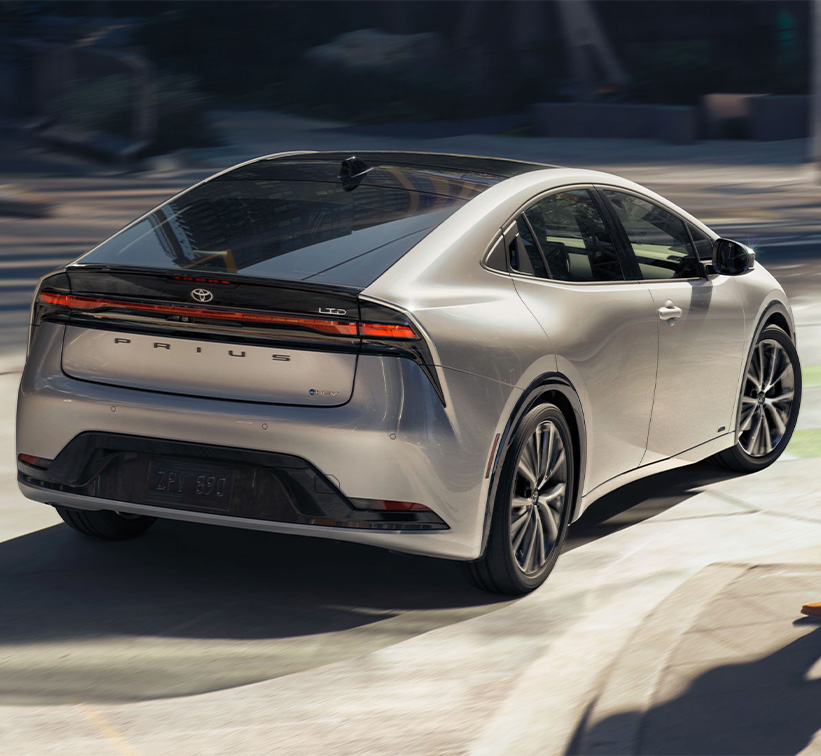
From the outside, the two are nearly identical, sharing the low, aerodynamic profile introduced with the current generation. Both seat five, ride on the same 108.3-inch wheelbase, and place a 7-inch digital gauge cluster directly ahead of the driver.
The trim lineups are named differently. The Prius comes in LE, XLE, Nightshade, and Limited trims, with 17-inch alloy wheels with wheel covers on the LE and 19-inch alloys on the XLE and above. The Prius Plug-in Hybrid comes in SE, XSE, Nightshade Edition, and XSE Premium trims, with 17-inch alloys with wheel covers on the SE and 19-inch alloys on the XSE and above. Both lineups include a Nightshade trim with black-finished 19-inch wheels, blacked-out badging and trim, and carbon fiber detail on the dashboard. The Plug-in Hybrid Nightshade Edition is new for 2026, and within the Plug-in Hybrid lineup it is the only trim offered in Karashi paint.
Cargo space is one measurable difference. The standard Prius offers 23.8 cubic feet behind the rear seats in LE trim and 20.3 cubic feet in XLE and Limited trims, while the Prius Plug-in Hybrid offers 20.3 cubic feet.
Comfort features climb a similar ladder in both models. A heated steering wheel is standard on every Prius Plug-in Hybrid, including the SE, while on the standard Prius it arrives with the XLE along with heated front seats and SofTex®-trimmed upholstery. At the top of each lineup, the Prius Limited and Prius Plug-in Hybrid XSE Premium add heated and ventilated front seats, a memory driver’s seat, and a power liftback.
Both models use Toyota Audio Multimedia with an 8-inch touchscreen on most trims and a 12.3-inch touchscreen standard on the Prius Limited and Prius Plug-in Hybrid XSE Premium, with the larger screen available on select mid-level trims. Wireless Apple CarPlay® and Android Auto™ compatibility, over-the-air updates, and six USB-C ports are standard across both lineups. An eight-speaker JBL® Premium Audio system with Clari-Fi® technology is standard on the Prius Limited and Prius Plug-in Hybrid XSE Premium, while other trims use a six-speaker system. Digital Key capability is available on upper trims of both models.
The Prius Plug-in Hybrid XSE Premium also offers an available 185-watt solar roof, offered in limited quantities, that can help charge the drive battery while the car is parked and supply power to auxiliary functions while driving.
On the safety front, both models come standard with Toyota Safety Sense™ 3.0, which includes:
Blind Spot Monitor with Rear Cross-Traffic Alert is standard on every trim of both models. Front and Rear Parking Assist with Automatic Braking is available across the Prius lineup and on the Plug-in Hybrid SE, and standard on the Plug-in Hybrid XSE and above. The top Prius Limited and Prius Plug-in Hybrid XSE Premium also offer an available Panoramic View Monitor and Advanced Park, which can help steer and brake the car into parallel and perpendicular spaces.
There is no wrong choice between these two. The right one depends on your daily drive and your access to charging.
The 2026 Prius may be the better match if you:
The 2026 Prius Plug-in Hybrid may be the better match if you:
The best way to decide is to drive them back to back. Visit Delaney Toyota of DuBois in DuBois, PA to explore the 2026 Prius and Prius Plug-in Hybrid lineups and schedule your test drive.