Open Today Sales: 9 AM-8 PMOpen Today Service: 7:30 AM-5 PM
The compact SUV segment is one of the most fiercely contested in the automotive world, and the 2026 Toyota RAV4, the 2026 Honda CR-V, and the 2026 Hyundai Tucson are three of its most popular names. Each brings a loyal following and a well-rounded feature set. But when the details are compared side by side, one vehicle takes a decisive step forward for the entire class. The fully redesigned 2026 RAV4 has made a historic shift to an all-hybrid lineup, redefining what a compact SUV can offer in efficiency, power, and capability.
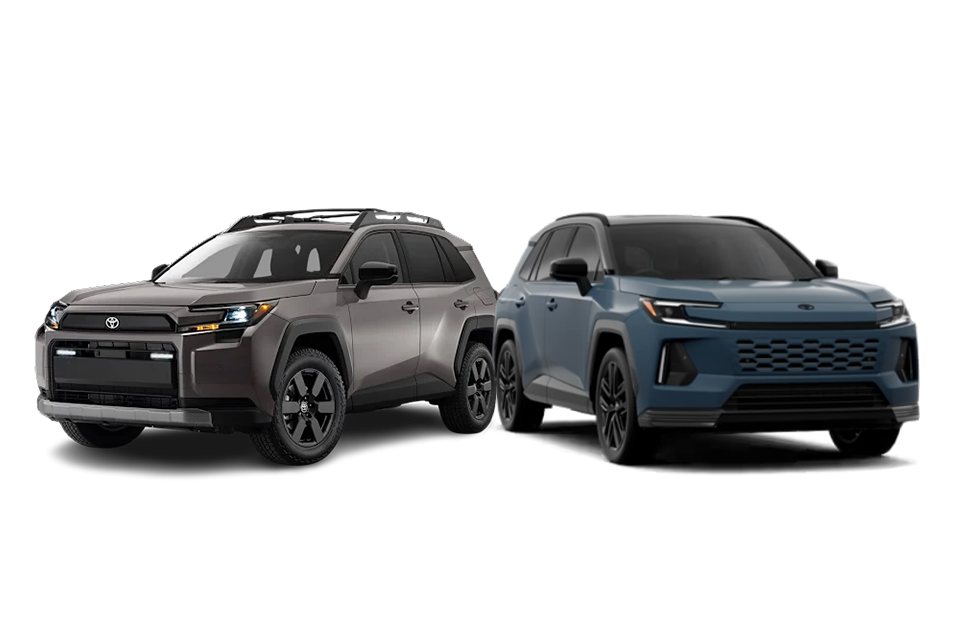
For 2026, Toyota made a bold move that neither competitor has matched: every 2026 RAV4 now runs exclusively on Toyota’s advanced hybrid system. RAV4 Hybrid models deliver 226 horsepower with FWD and 236 horsepower with AWD, while the RAV4 Plug-in Hybrid pushes output to 324 combined horsepower, offering an estimated 52 miles of all-electric driving range. Combined fuel economy reaches up to an estimated 43 MPG combined (47 city / 40 highway) on select FWD trims, and AWD Hybrid trims above the base LE, plus all PHEV models, are rated to tow up to 3,500 pounds.
The 2026 Honda CR-V offers a 1.5-liter turbocharged four-cylinder producing 190 horsepower on standard trims, with a combined fuel economy rating of around 30 MPG. The CR-V Hybrid steps up to 204 horsepower and up to 40 MPG combined with front-wheel drive, or 37 MPG combined with AWD. While the Hybrid is a capable option, it falls noticeably short of the RAV4 in both output and efficiency, and no plug-in hybrid variant is offered for the CR-V.
The 2026 Hyundai Tucson uses a 2.5-liter four-cylinder engine rated at 187 horsepower on gas trims, paired with an 8-speed automatic transmission. The Tucson Hybrid delivers 231 combined horsepower and a PHEV variant is also available. The gas-powered Tucson’s towing capacity is rated at up to 2,750 pounds. Across every powertrain comparison, the RAV4’s standard hybrid efficiency, stronger output, and higher tow rating give it a meaningful and measurable performance edge over both rivals.
The 2026 RAV4 arrives with a completely redesigned exterior built on Toyota’s updated TNGA-K architecture, which delivers added structural rigidity and reduces road noise entering the cabin. Inside, all trims receive a standard 12.3-inch digital gauge cluster and up to 37.8 cubic feet of cargo space behind the rear seats. Seven distinct trim grades offer genuine personality choices: the adventure-ready Woodland brings all-terrain tires, raised roof rails with crossbars, and Rigid Industries LED fog lights, while the first-ever GR Sport adds motorsport-inspired styling and performance-tuned shocks and steering. Whether the priority is refinement, ruggedness, or performance, there is a RAV4 trim built for it.
The 2026 CR-V offers a roomy, well-organized cabin that comfortably seats five, with dual-zone automatic climate control and a one-touch power moonroof standard across the lineup. The 2026 Tucson provides a clean and modern interior with a spacious feel, available premium materials, and a thoughtful layout that works well for daily driving. Both are genuinely strong family vehicles. However, the RAV4’s broader range of design identities, larger available touchscreen, and fully reinvented platform mark a more substantial leap forward than either competitor delivers for 2026.
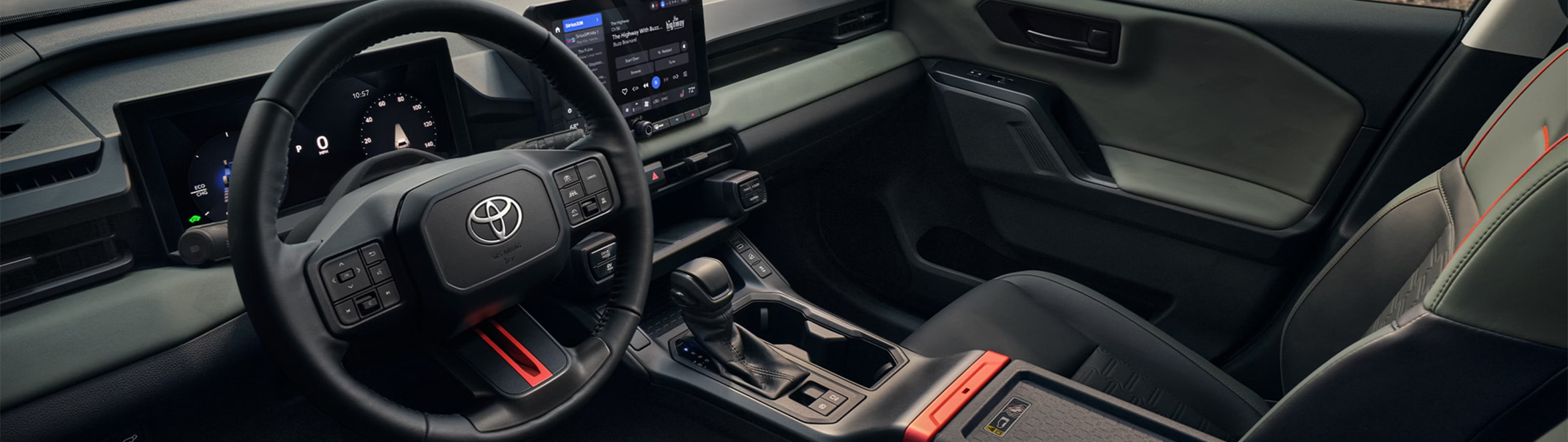
Every 2026 RAV4 comes standard with a 12.3-inch digital gauge cluster and wireless Apple CarPlay and Android Auto. Higher trims offer an available 12.9-inch multimedia touchscreen, dual wireless charging pads, and an available JBL 11-speaker premium audio system. The entire lineup is powered by Toyota’s Arene software platform, which enables faster system responsiveness, integrated navigation within the gauge cluster, and over-the-air update capability for a truly modern ownership experience.
Every 2026 CR-V now includes a newly updated 9-inch touchscreen with wireless Apple CarPlay and Android Auto as standard. The EX-L trim adds a 10.2-inch digital instrument cluster, and an available Bose premium audio system is offered at the top of the lineup. The 2026 Tucson comes standard with a 12.3-inch touchscreen and wireless smartphone connectivity on every trim. Upper Tucson grades feature a panoramic curved display combining the infotainment screen with a 12.3-inch digital instrument cluster, and an available Bose audio system is offered on the Limited.
The RAV4’s 12.9-inch available display, Arene-powered interface, dual wireless charging, and broader connectivity options give it the technology advantage in this comparison.
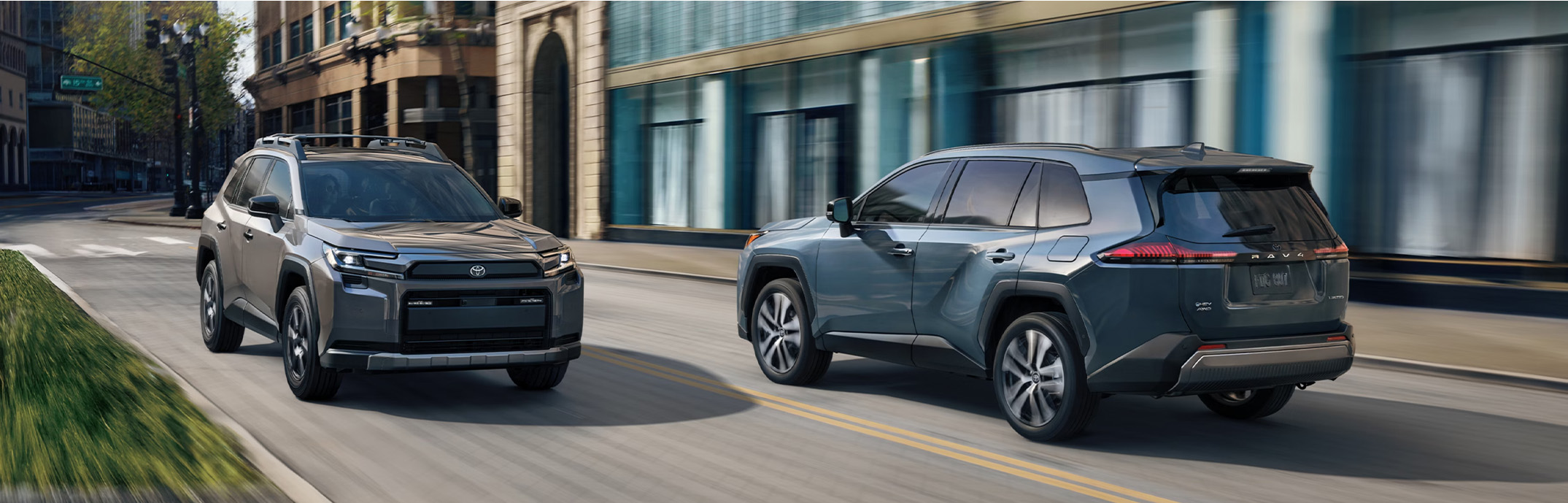
The 2026 RAV4 is the first Toyota model to feature Toyota Safety Sense 4.0 (TSS 4.0) — the brand’s most advanced driver assistance suite — standard on every single trim. TSS 4.0 includes:
Additional available safety features include a digital rearview mirror, panoramic view monitor, and Intelligent Clearance Sonar.
The 2026 CR-V comes standard with Honda Sensing on every trim, which includes Collision Mitigation Braking, Road Departure Mitigation, Lane Keeping Assist, and Adaptive Cruise Control. The 2026 Tucson includes Hyundai SmartSense as standard across all trims, covering Forward Collision-Avoidance Assist, Lane Keeping Assist, Blind Spot Warning, and Driver Attention Warning. Both competitive safety suites are thorough and well-regarded. But with Toyota Safety Sense 4.0 representing the newest generation of Toyota’s continuously evolving safety technology, the RAV4 sets the highest bar in the segment.
The 2026 Toyota RAV4 is the clear winner of this three-way comparison. Its exclusive hybrid-only lineup delivers more efficiency, more power, and a higher tow rating than both the CR-V and the Tucson. It brings a more advanced infotainment experience, a larger available touchscreen, and the segment’s most capable driver assistance package in Toyota Safety Sense 4.0. With seven trim grades and three distinct design directions, the RAV4 offers a configuration for every driver and every lifestyle.
Visit Delaney Toyota of DuBois in DuBois, PA to explore the 2026 Toyota RAV4 lineup and schedule your test drive today.